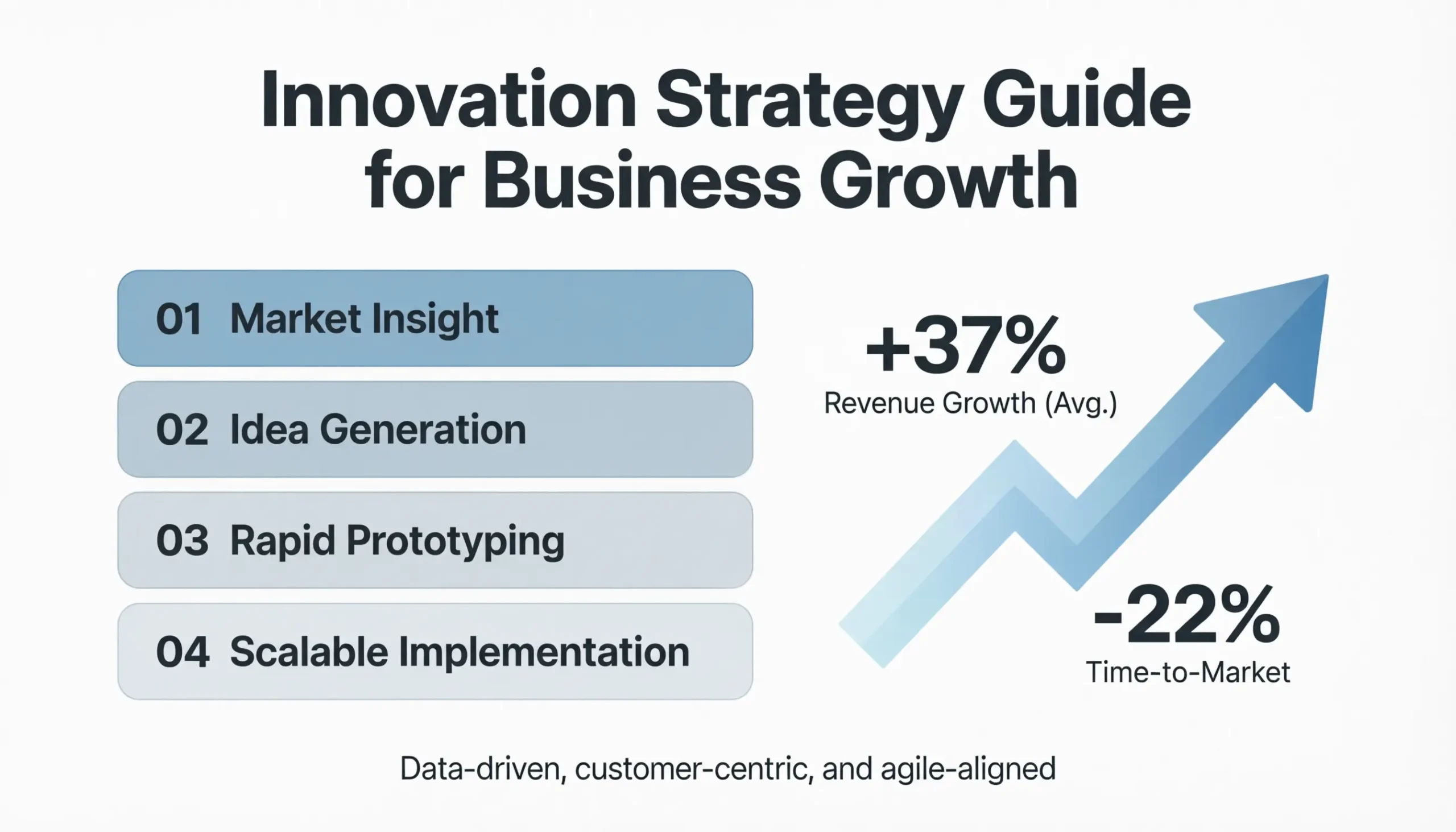

Introduction
Businesses today operate in a fast-changing environment where customer expectations, technology, and competition evolve rapidly. To survive and grow, organizations must constantly create new ideas, improve products, and deliver better services. This is where innovation strategy becomes essential. It helps companies plan how they will generate creative solutions and stay competitive in their industries.
An effective innovation strategy provides direction and ensures that businesses invest time and resources in the right opportunities. Instead of relying on random ideas, companies follow structured plans that align innovation efforts with long-term goals. This approach helps organizations adapt to market trends and meet customer demands efficiently.
Many beginners think innovation is only about creating new products. However, it also includes improving processes, business models, and customer experiences. With the right innovation strategy, businesses can reduce risks, increase efficiency, and strengthen their brand value.
In this guide, you will learn everything about innovation strategy, including its importance, development steps, benefits, risks, and expert tips. Whether you are a beginner or have some experience, this article will help you understand how innovation planning works in real-world business situations.
What is Innovation Strategy?
Innovation strategy is a structured plan that helps businesses create and implement new ideas to achieve their goals. It defines how organizations develop products, improve services, and adapt to changing market conditions. A strong innovation strategy ensures that companies focus on meaningful improvements rather than random experiments.
This strategy connects innovation activities with business objectives. It outlines priorities, resources, and methods needed to generate creative solutions. Companies use it to decide where to invest, which projects to pursue, and how to measure success.
There are different types of innovation strategies depending on business goals. Some organizations focus on technological advancements, while others improve customer experience or operational efficiency. For example, a company may introduce digital tools to streamline processes or develop new services to attract customers.
A well-planned innovation strategy also encourages teamwork and collaboration. Employees feel motivated to share ideas when they know their contributions support company growth. As a result, organizations create a culture of continuous improvement.
Why is Innovation Strategy Important?

Innovation plays a crucial role in helping businesses stay competitive and relevant. Without a clear innovation strategy, companies may struggle to adapt to new market trends and customer expectations.
Firstly, innovation helps businesses stay ahead of competitors. Companies that continuously improve products and services attract more customers and build strong brand loyalty. A structured innovation strategy allows organizations to identify opportunities before competitors do.
Secondly, it improves efficiency and productivity. Businesses that adopt innovative solutions can reduce operational costs and improve workflow. For example, automation tools can save time and increase accuracy.
Another reason innovation is important is customer satisfaction. Modern customers expect personalized experiences and advanced solutions. Companies with a strong innovation strategy can meet these expectations and build long-term relationships with customers.
Additionally, innovation supports business growth. It helps organizations explore new markets, develop new revenue streams, and expand their operations. Without innovation planning, businesses may face stagnation and lose their market position.
Detailed Step-by-Step Guide
Step 1: Define Clear Business Goals
The first step in developing an innovation strategy is understanding business objectives. Organizations must identify what they want to achieve through innovation, such as increasing sales, improving customer experience, or expanding into new markets.
Clear goals provide direction and help teams focus on meaningful projects. Businesses should ensure innovation goals align with overall company vision and mission.
Step 2: Analyze Market Trends and Customer Needs
Understanding market trends and customer preferences is essential for successful innovation. Companies should research industry developments, customer behavior, and competitor strategies.
Market analysis helps organizations identify opportunities and gaps. By studying customer feedback and data, businesses can design innovative solutions that solve real problems.
Step 3: Encourage Creative Thinking
Creativity is the foundation of innovation. Organizations should create an environment where employees feel comfortable sharing ideas. Brainstorming sessions, workshops, and team discussions can generate valuable suggestions.
Companies that promote collaboration often develop stronger innovation strategy plans. Diverse perspectives help teams create unique solutions and avoid limited thinking.
Step 4: Allocate Resources and Build Teams
Innovation requires proper resources, including budget, technology, and skilled professionals. Businesses should allocate resources carefully to ensure successful project execution.
Building dedicated innovation teams improves efficiency. These teams can focus on research, development, and testing while maintaining communication with other departments.
Step 5: Test and Implement Ideas
Before launching new ideas, organizations must test them through prototypes or pilot programs. Testing helps identify potential challenges and ensures solutions meet customer expectations.
Once testing is successful, businesses can implement ideas across operations. A strong innovation strategy includes performance measurement to track progress and improve results.
Benefits of Innovation Strategy
- Helps businesses stay competitive in rapidly changing markets
- Encourages creativity and employee engagement
- Improves operational efficiency and productivity
- Supports long-term business growth
- Enhances customer satisfaction and loyalty
- Creates opportunities for new revenue streams
- Strengthens brand reputation and market position
- Helps organizations adapt to technological advancements
Disadvantages / Risks
- Requires significant investment in time and resources
- Innovation projects may fail or deliver slow results
- Resistance to change among employees or management
- Difficulty in measuring innovation success
- Risk of focusing on trends instead of real customer needs
- Challenges in maintaining consistency during implementation
Common Mistakes to Avoid
One common mistake businesses make is implementing innovation without clear goals. Without defined objectives, companies may waste resources on ineffective projects.
Another mistake is ignoring customer feedback. Successful innovation focuses on solving real problems. Businesses that overlook customer needs often fail to create valuable solutions.
Many organizations also avoid taking risks. Innovation requires experimentation and learning from failures. Companies that fear failure limit their growth potential.
Poor communication is another major issue. Teams working on innovation projects must share ideas and progress regularly. Lack of collaboration reduces efficiency and slows innovation development.
Finally, businesses sometimes neglect performance measurement. Without tracking results, organizations cannot improve their innovation strategy or identify successful approaches.
FAQs
What is the main purpose of innovation strategy?
The main purpose of innovation strategy is to guide businesses in creating and implementing new ideas that support growth and competitiveness. It ensures innovation efforts align with business objectives.
Can small businesses use innovation planning?
Yes, small businesses can benefit greatly from innovation planning. It helps them compete with larger organizations by improving services, products, and operational efficiency.
How long does it take to develop an innovation plan?
The time required depends on business size, goals, and industry. Some companies develop strategies within months, while others require longer planning and research periods.
Is innovation only related to technology?
No, innovation includes improving business models, processes, customer experience, and services. Technology is only one part of the overall innovation process.
How can companies measure innovation success?
Businesses can measure success using performance indicators such as customer satisfaction, revenue growth, productivity improvement, and market expansion.
Why do innovation projects fail?
Innovation projects often fail due to poor planning, lack of resources, unclear goals, or ignoring customer needs. Proper research and testing reduce failure risks.
Expert Tips & Bonus Points
Businesses should create a culture that encourages experimentation and learning. Employees should feel safe sharing creative ideas without fear of failure.
Organizations should also invest in continuous learning and skill development. Training programs help teams understand new technologies and innovation methods.
Collaboration with external partners, such as startups or research institutions, can provide fresh perspectives and advanced solutions. Partnerships often improve innovation outcomes.
Another important tip is balancing short-term and long-term innovation projects. Short-term improvements deliver quick results, while long-term projects support sustainable growth.
Companies should regularly review their innovation strategy to ensure it aligns with changing market conditions and customer expectations.
Conclusion
Innovation is no longer optional for businesses that want to succeed in modern markets. Companies must continuously improve their products, services, and processes to stay competitive. A well-designed innovation strategy provides a clear roadmap for achieving these goals and maintaining business growth.
Through structured planning, organizations can identify opportunities, reduce risks, and improve efficiency. Innovation also strengthens customer relationships by delivering better solutions and personalized experiences. Businesses that invest in creativity and research often achieve long-term success and market leadership.
While innovation offers many advantages, it also requires careful management. Companies must allocate resources properly, encourage teamwork, and measure performance regularly. By avoiding common mistakes and focusing on customer needs, organizations can create successful innovation initiatives.
In today’s dynamic business environment, innovation planning supports adaptability and resilience. Companies that follow a strong innovation strategy can respond to market changes quickly and develop new growth opportunities. By implementing the steps and tips discussed in this guide, businesses can build sustainable success and remain competitive in the future.