
Introduction
Data science is one of the fastest-growing fields in the world today. From small businesses to global companies, everyone is using to make smarter decisions. In simple words, helps us understand data and turn it into useful information. Whether you shop online, use social media, or watch movies on streaming platforms, is working behind the scenes.
In today’s digital world, huge amounts of data are created every second. Without data science, this information would be useless. With the right tools and skills, helps companies predict trends, improve products, and understand customer behavior. That is why learning has become so important for students, professionals, and business owners.
This guide will explain data science in simple English. You will learn what is, why it matters, how it works, and how you can start learning it. If you are a beginner or have some basic knowledge, this article will help you understand in a clear and practical way.
What is Data Science?
Data science is a field that combines statistics, programming, and domain knowledge to analyze data and extract meaningful insights. It focuses on collecting, cleaning, analyzing, and interpreting data to solve real-world problems.
In simple terms, data science is the process of turning raw data into useful information. For example, an online store collects customer data such as age, location, and buying history. Using data science, the store can understand which products are popular and recommend items to customers.
Data science uses tools like Python, R, SQL, and machine learning algorithms. It also involves data visualization to present findings in charts and graphs. This makes complex data easy to understand.
The main goal of data science is to make better decisions based on facts rather than guesses. It helps businesses reduce risks, improve performance, and plan for the future.
Why is Data Science Important?
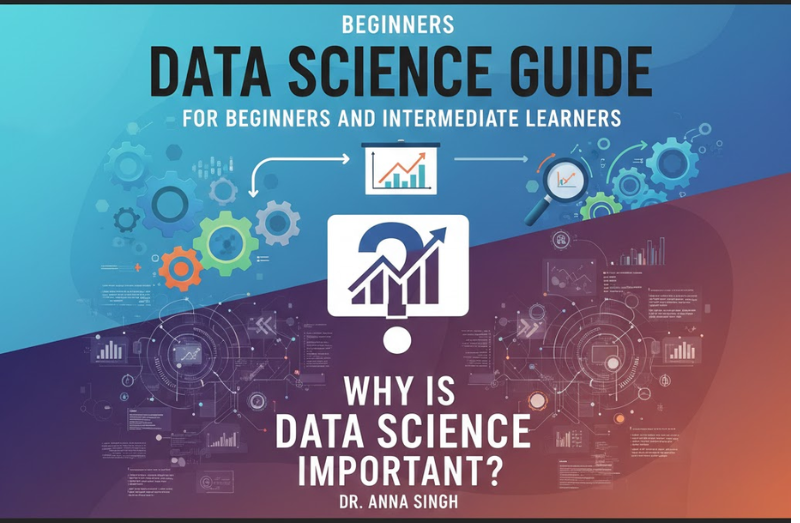
Data science is important because it helps organizations make data-driven decisions. In the past, many decisions were based on experience or intuition. Today, companies rely on data science to support their strategies.
One major reason data science is important is prediction. For example, banks use data science to detect fraud. Hospitals use it to predict diseases. Retail companies use it to forecast sales.
Another reason is efficiency. With data science, businesses can automate tasks and save time. They can also identify problems quickly and fix them before they grow.
Data science also improves customer experience. By analyzing customer behavior, companies can personalize services. For example, streaming platforms recommend shows based on your viewing history.
In short, data science helps organizations grow, compete, and innovate in a digital world.
Detailed Step-by-Step Guide
Step 1: Understand the Problem
The first step in data science is understanding the problem. Before analyzing data, you must know what question you want to answer.
For example, a company may want to know why sales are dropping. Clearly defining the problem helps you focus on the right data.
Step 2: Collect Data
The next step is collecting data. Data can come from different sources such as databases, websites, surveys, or sensors.
In data science, data can be structured or unstructured. Structured data is organized in tables, while unstructured data includes images, videos, and text.
Step 3: Clean the Data
Raw data is often messy. It may contain missing values, errors, or duplicates. Cleaning the data is an important part of data science.
This step ensures that the data is accurate and ready for analysis. Clean data leads to better results.
Step 4: Explore and Analyze Data
After cleaning, the next step in data science is exploring the data. This involves using statistics and visualization tools to understand patterns and trends.
For example, you may create charts to see which products sell the most. This helps you discover insights.
Step 5: Build Models
In advanced data science, you build models using machine learning algorithms. These models can predict outcomes based on historical data.
For example, a model can predict whether a customer will buy a product or not.
Step 6: Evaluate the Model
After building a model, you must test it. Evaluation ensures that the model is accurate and reliable.
If the model does not perform well, you adjust it and try again.
Step 7: Communicate Results
The final step in data science is presenting the results. Data scientists use charts, dashboards, and reports to explain findings.
Clear communication helps decision-makers understand the insights and take action.
Benefits of Data Science
Data science offers many advantages for individuals and organizations.
- Helps in better decision-making
- Improves business performance
- Saves time through automation
- Identifies trends and patterns
- Enhances customer satisfaction
- Reduces risks and fraud
- Supports innovation and growth
- Creates high-demand career opportunities
Because of these benefits, data science is widely used in finance, healthcare, marketing, education, and technology.
Disadvantages / Risks
Although data science has many advantages, it also comes with some challenges.
- Requires technical skills and training
- Data privacy concerns
- High implementation costs
- Risk of biased data
- Complex tools and technologies
- Time-consuming data preparation
Understanding these risks helps organizations use data science responsibly and effectively.
Common Mistakes to Avoid
Many beginners make mistakes while learning data science. Avoiding these errors can save time and effort.
One common mistake is ignoring data cleaning. Dirty data leads to incorrect results. Always clean your data carefully.
Another mistake is focusing only on tools. Learning programming is important, but understanding statistics and problem-solving is equally important in data science.
Some people also forget to define the problem clearly. Without a clear goal, data science projects can fail.
Overfitting models is another issue. This happens when a model performs well on training data but poorly on new data.
Lastly, poor communication of results can reduce the impact of your work. Always present findings in a simple and clear way.
FAQs
1. Is data science hard to learn?
Data science can seem difficult at first, especially if you are new to programming and statistics. However, with consistent practice and the right resources, anyone can learn it step by step.
2. What skills are needed for data science?
You need basic programming skills, knowledge of statistics, and problem-solving abilities. Communication skills are also important in data science.
3. Do I need a degree for data science?
A degree in computer science, mathematics, or a related field can help, but it is not mandatory. Many people learn data science through online courses and practice.
4. Which programming language is best for data science?
Python is one of the most popular languages for data science because it is easy to learn and has powerful libraries. R is also widely used.
5. How long does it take to learn data science?
The time depends on your background and learning speed. For beginners, it may take several months to build a strong foundation in data science.
6. What is the difference between data science and data analysis?
Data analysis focuses mainly on examining data to find insights. Data science is broader and includes machine learning, predictive modeling, and advanced techniques.
Expert Tips & Bonus Points
If you want to succeed in data science, start with the basics. Learn statistics and programming before moving to advanced topics.
Practice regularly by working on small projects. Real-world practice improves your understanding of data science concepts.
Build a portfolio to showcase your work. Employers value practical experience more than theory.
Stay updated with industry trends. Data science is constantly evolving, so continuous learning is important.
Join online communities and forums. Networking helps you learn from others and stay motivated.
Finally, focus on problem-solving. Tools may change, but strong analytical thinking will always be valuable in data science.
Conclusion
Data science has transformed the way businesses and individuals make decisions. By combining statistics, programming, and domain knowledge, data science turns raw data into valuable insights. From predicting customer behavior to detecting fraud, its applications are endless.
For beginners, learning data science may feel overwhelming at first. However, by following a structured approach, you can gradually build your skills. Start by understanding the basics, then move on to data cleaning, analysis, and modeling. With practice and dedication, you can become confident in applying data science techniques.
For intermediate learners, the next step is working on real-world projects and improving your modeling skills. Focus on understanding the problem deeply before applying complex algorithms. Strong foundations and clear communication will set you apart.
In the modern digital world, data science is not just a career option but a powerful skill. It helps organizations grow, innovate, and compete effectively. By learning data science, you open the door to exciting opportunities and a future driven by knowledge and insights.