Introduction
Intelligent systems are changing the way we live, work, and communicate every day. From smart assistants on our phones to recommendation engines on shopping websites, are now part of our daily routines. Even if you do not notice them, they are working in the background to make decisions, analyze data, and solve problems.
In simple words, intelligent systems are computer-based systems that can learn, reason, and make decisions like humans. They use data, algorithms, and logical rules to perform tasks that normally require human intelligence. Because of this, are widely used in healthcare, education, banking, transportation, and many other industries.
For beginners and intermediate learners, understanding intelligent systems is very important. Not only do they shape modern technology, but they also create new career opportunities. In this guide, you will learn what are, why they matter, how they work, their benefits and risks, and how to use them wisely. By the end, you will have a clear and practical understanding of intelligent systems.
What is Intelligent Systems?
Intelligent systems are computer systems designed to perform tasks that require human-like thinking. These tasks include learning from experience, understanding patterns, solving problems, and making decisions.
Unlike traditional software that follows fixed instructions, intelligent systems can adapt. They improve their performance based on new information. For example, a music streaming app learns your preferences and suggests songs you may like. This learning ability makes intelligent systems powerful and flexible.
There are different types of intelligent systems, such as:
- Expert systems that provide advice based on rules
- Machine learning systems that learn from data
- Natural language systems that understand human language
- Robotics systems that interact with the physical world
For example, a hospital may use intelligent systems to predict diseases based on patient data. Similarly, banks use them to detect fraud by identifying unusual patterns in transactions.
In short, intelligent systems combine data, algorithms, and computing power to make smart decisions automatically.
Why is Intelligent Systems Important?
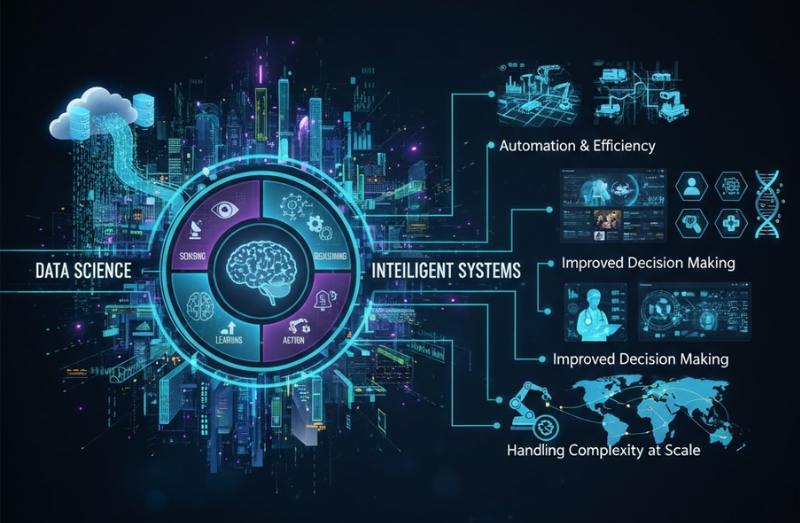
Intelligent systems are important because they improve efficiency, accuracy, and speed in many tasks. In today’s digital world, data is growing rapidly. Humans alone cannot process all this information. Intelligent systems help manage and analyze large amounts of data quickly.
Another reason intelligent systems matter is automation. Many repetitive tasks can now be handled by machines. For example, customer service chatbots answer common questions without human help. This saves time and reduces costs for companies.
Moreover, intelligent systems support better decision-making. Businesses use them to study customer behavior and plan strategies. Doctors use them to analyze medical reports. Teachers use them to personalize learning for students.
In addition, intelligent systems encourage innovation. They help create smart cities, self-driving cars, and advanced healthcare tools. As technology continues to grow, intelligent systems will become even more essential in everyday life.
Detailed Step-by-Step Guide
Step 1: Understand the Basics
Before working with intelligent systems, learn basic concepts such as data, algorithms, and programming. Understanding how computers process information is the first step.
You should also learn about problem-solving and logical thinking. Intelligent systems depend on structured reasoning and clear objectives.
Step 2: Learn About Data
Data is the foundation of intelligent systems. Without data, systems cannot learn or improve.
Start by understanding different types of data:
- Structured data like numbers and tables
- Unstructured data like text and images
Practice collecting, cleaning, and organizing data. Good data quality leads to better system performance.
Step 3: Explore Learning Methods
Intelligent systems often use learning techniques such as:
- Supervised learning
- Unsupervised learning
- Reinforcement learning
Each method serves a different purpose. For example, supervised learning uses labeled data to train models, while unsupervised learning finds hidden patterns.
Step 4: Choose the Right Tools
There are many tools and programming languages used to build intelligent systems. Popular choices include Python and data analysis libraries.
Beginners should start with simple projects, such as predicting house prices or classifying emails as spam or not spam.
Step 5: Test and Improve
After building a model, test its accuracy. Intelligent systems need regular updates and improvements.
Monitor performance and adjust algorithms if needed. Continuous improvement ensures better results over time.
Step 6: Apply to Real Problems
Finally, apply intelligent systems to real-world problems. For example:
- Create a recommendation system for books
- Build a simple chatbot
- Develop a system that predicts sales trends
Practical experience strengthens your understanding and skills.
Benefits of Intelligent Systems
Intelligent systems offer many advantages in different fields:
- Improve efficiency by automating repetitive tasks
- Reduce human error in complex calculations
- Analyze large amounts of data quickly
- Support better and faster decision-making
- Provide personalized user experiences
- Enhance productivity in businesses
- Enable innovation in technology and research
- Operate 24/7 without fatigue
For example, in healthcare, intelligent systems can detect diseases earlier than traditional methods. In education, they adapt lessons according to student performance.
Overall, intelligent systems create smarter and more responsive environments.
Disadvantages / Risks
Despite many benefits, intelligent systems also have challenges and risks:
- High development and maintenance costs
- Dependence on large amounts of quality data
- Risk of biased results if data is unfair
- Privacy concerns related to data collection
- Job displacement in certain industries
- Security risks if systems are hacked
- Lack of transparency in complex models
For example, if intelligent systems are trained on incomplete data, they may produce incorrect results. Therefore, careful planning and monitoring are necessary.
Understanding these risks helps in using intelligent systems responsibly.
Common Mistakes to Avoid
When working with intelligent systems, many beginners make common mistakes.
One major mistake is ignoring data quality. Poor data leads to poor performance. Always clean and verify your data before training a system.
Another mistake is choosing complex models too early. Beginners should start with simple algorithms and gradually move to advanced ones.
Overfitting is also a common issue. This happens when intelligent systems perform well on training data but fail in real situations. To avoid this, use proper testing methods.
Some people also forget about ethical considerations. Intelligent systems should be fair, transparent, and respectful of privacy.
Finally, lack of documentation can create problems. Always document your process for future improvement.
FAQs
1. What are intelligent systems in simple words?
Intelligent systems are computer programs that can learn, think, and make decisions similar to humans. They use data and algorithms to solve problems automatically.
2. Where are intelligent systems used?
They are used in healthcare, finance, education, transportation, online shopping, security systems, and many other areas. For example, recommendation engines and fraud detection systems are common applications.
3. Do I need programming skills to learn intelligent systems?
Basic programming knowledge is helpful. Languages like Python are commonly used. However, beginners can start with simple tools and online platforms before moving to advanced coding.
4. Are intelligent systems the same as artificial intelligence?
Intelligent systems are a part of artificial intelligence. They focus on building systems that behave intelligently using different AI techniques.
5. Can intelligent systems replace human jobs?
In some cases, they automate repetitive tasks. However, they also create new job opportunities in technology, data analysis, and system management.
6. How can I start a career in intelligent systems?
Start by learning programming, data analysis, and basic AI concepts. Work on small projects and gradually build advanced skills. Practice regularly and stay updated with new trends.
Expert Tips & Bonus Points
To master intelligent systems, focus on continuous learning. Technology changes quickly, so staying updated is essential.
Work on real projects instead of only reading theory. Practical experience improves your understanding.
Join online communities and discussion groups. Sharing ideas helps you learn faster.
Always think about ethics and responsibility. Intelligent systems should benefit society and respect user privacy.
Improve your communication skills. Explaining technical ideas clearly is valuable in professional environments.
Finally, be patient. Building strong knowledge in intelligent systems takes time and consistent effort.
Conclusion
Intelligent systems are transforming the modern world in powerful ways. From automating daily tasks to supporting complex decision-making, they play a key role in almost every industry. As data continues to grow, intelligent systems will become even more important in managing information and solving real-world problems.
For beginners and intermediate learners, understanding intelligent systems opens doors to exciting opportunities. By learning the basics, practicing with real projects, and staying updated, anyone can develop strong skills in this field. At the same time, it is important to consider ethical and security issues while designing and using intelligent systems.
Although there are challenges such as data quality, privacy concerns, and technical complexity, the benefits often outweigh the risks when systems are built responsibly. Intelligent systems improve efficiency, accuracy, and innovation across many sectors.
In the coming years, intelligent systems will continue to shape technology and society. Therefore, learning about them today is a smart step toward a successful future in the digital world.