
Introduction
Running a small business often means managing many tasks with limited time and resources. Fortunately, AI Tools for Small Business help owners automate routine work, improve customer service, and make smarter decisions without hiring large teams. From writing content to tracking sales and organizing projects, these tools simplify daily operations. Beginners can start with affordable options and gradually expand as their business grows. Understanding how these solutions work helps entrepreneurs save time, reduce costs, increase productivity, and stay competitive in today’s fast-changing digital marketplace.
What is AI Tools for Small Business?
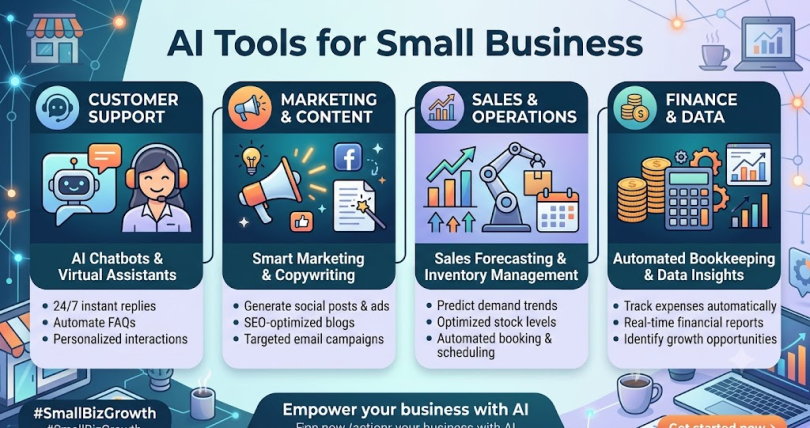
AI Tools for Small Business are software applications that use intelligent technology to automate tasks, analyze data, and support better decision-making. They can answer customer questions, create marketing content, manage schedules, organize documents, and provide business insights. Popular categories include chatbots, writing assistants, accounting software, customer relationship management platforms, and analytics tools. These solutions are designed to help small companies operate more efficiently while reducing repetitive work and improving overall business performance.
Why is AI Tools for Small Business Important?
Small businesses often work with tight budgets and limited staff. Intelligent software allows owners to complete more work in less time while maintaining quality. For example, an online store can automatically answer common customer questions, while a local service business can schedule appointments without constant manual effort. Better efficiency creates happier customers, stronger productivity, and more opportunities for growth.
Step-by-Step Guide
1. Identify Business Needs
List repetitive tasks such as answering emails, creating content, invoicing, or managing inventory. Focus on areas consuming the most time.
2. Choose the Right Tool
Compare features, pricing, ease of use, and customer support. Select solutions matching your budget and business goals.
3. Start Small
Use one application first instead of changing every process. Test results before adding more automation.
4. Train Your Team
Show employees how the software works. Proper training improves confidence and reduces costly mistakes.
5. Monitor Performance
Track saved time, customer satisfaction, and operating costs. Regular reviews help improve long-term results.
Benefits
- Saves valuable time by automating repetitive daily tasks.
- Reduces operating costs through improved efficiency.
- Improves customer support with faster responses.
- Helps create marketing content more quickly.
- Provides useful business insights through data analysis.
- Supports business growth without significantly increasing staff.
Risks or Disadvantages
- Initial learning may require extra time.
- Some advanced features can increase monthly costs.
- Poor-quality data may produce inaccurate recommendations.
- Overdependence on automation may reduce personal customer interactions.
- Privacy concerns require careful handling of customer information.
Common Mistakes to Avoid
Many beginners purchase software without defining clear business goals. Others select complicated platforms with features they never use. Ignoring employee training also reduces success because staff may avoid new systems. Another mistake is failing to review performance regularly. Always compare results against your original objectives. Finally, never overlook data security. Strong passwords, regular updates, and secure backups protect valuable business information from unnecessary risks.
FAQs
1. Are these tools expensive?
Many platforms offer affordable monthly plans and free versions for beginners.
2. Can beginners use them easily?
Yes. Most modern applications provide simple dashboards and helpful tutorials.
3. Which business areas benefit most?
Marketing, customer service, accounting, scheduling, and sales management benefit significantly.
4. Do they replace employees?
No. They support staff by handling repetitive tasks while people focus on creativity and customer relationships.
5. How quickly can results appear?
Many businesses notice improved productivity within a few weeks of consistent use.
Expert Tips
Begin with one affordable solution before investing in several platforms. Measure performance using clear goals such as time saved or increased sales. Keep software updated to access new features and stronger security. Combine automation with personal communication because customers still value genuine relationships. Review reports regularly to discover trends and improve future business decisions. Consistent learning and gradual improvement produce better long-term success than rushing into complex systems.
Conclusion
Adopting AI Tools for Small Business can transform daily operations by saving time, lowering costs, and improving customer experiences. Success depends on choosing practical solutions, training employees, and measuring results consistently. Small businesses should begin with simple applications, expand gradually, and always balance automation with personal service. By following these best practices, entrepreneurs can build efficient workflows, make informed decisions, and create stronger opportunities for sustainable business growth in an increasingly competitive marketplace while serving customers with greater confidence every day.