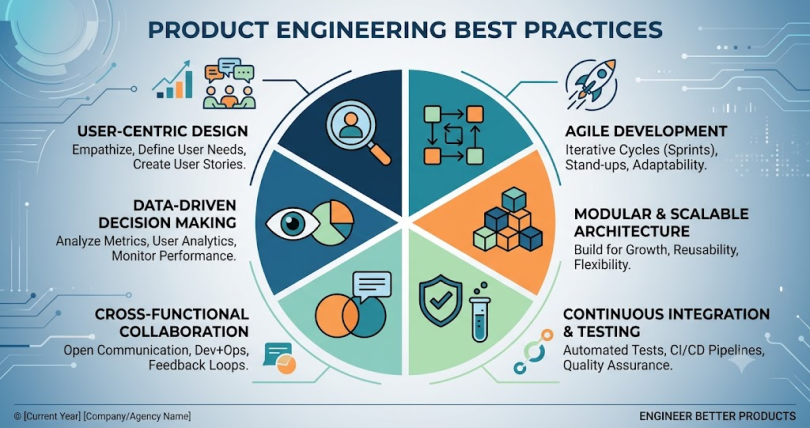

Introduction
Building a successful product requires more than a great idea. Companies must follow proven methods to create products that are reliable, user-friendly, and cost-effective. Product Engineering Best Practices help businesses improve quality, reduce development risks, and deliver better customer experiences. Whether you are launching a new product or improving an existing one, following a structured approach increases the chances of success. This guide explains the fundamentals, practical steps, benefits, and common mistakes so beginners and intermediate readers can understand how effective product engineering creates long-term business value.
What is Product Engineering Best Practices?
Product Engineering Best Practices refer to proven methods, processes, and standards used to design, develop, test, and improve products efficiently. These practices help teams create high-quality products that meet customer expectations while staying within budget and schedule.
Examples include gathering user feedback, following quality assurance processes, documenting requirements, using agile development, performing regular testing, and continuously improving products after launch. By following these practices, businesses can reduce errors, improve collaboration, and deliver reliable products that remain competitive.
Why is Product Engineering Best Practices Important?
Following Product Engineering Best Practices helps organizations build products that solve real customer problems while reducing costly mistakes. A well-planned engineering process improves communication among designers, developers, testers, and business teams.
For example, a software company that tests new features before release can identify issues early, saving both time and money. Likewise, a manufacturing business that follows strict quality standards produces more dependable products and earns greater customer trust.
Step-by-Step Guide
1. Understand Customer Requirements
Research customer needs through surveys, interviews, and market analysis. Clear requirements reduce misunderstandings during development.
2. Create a Detailed Product Plan
Define project goals, timelines, budgets, technical specifications, and responsibilities before development begins.
3. Build and Test Continuously
Develop products in small stages and perform regular testing. Early testing identifies problems before they become expensive.
4. Encourage Team Collaboration
Maintain strong communication between engineering, design, marketing, and support teams. Shared knowledge improves decision-making.
5. Review and Improve
Collect customer feedback after launch and use performance data to enhance future product versions.
Benefits
- Improves product quality and reliability.
- Reduces development costs by preventing costly mistakes.
- Increases customer satisfaction through better user experiences.
- Speeds up product development with organized workflows.
- Strengthens teamwork and communication across departments.
- Supports continuous innovation and long-term business growth.
Risks or Disadvantages
- Initial planning requires additional time and resources.
- Process changes may face resistance from team members.
- Advanced testing tools can increase project expenses.
- Poor implementation may delay product releases.
- Continuous improvement requires ongoing commitment and monitoring.
Common Mistakes to Avoid
Many teams begin development without clearly understanding customer needs. Others skip testing to save time, resulting in expensive fixes after launch. Poor documentation creates confusion and slows collaboration. Ignoring customer feedback also prevents meaningful product improvements. Another common mistake is failing to review project performance regularly. Successful engineering depends on continuous evaluation, effective communication, and consistent quality control throughout every stage of development.
FAQs
1. What are Product Engineering Best Practices?
They are proven methods that improve product design, development, testing, and overall quality.
2. Why are these practices important?
They reduce risks, improve efficiency, and help deliver products that satisfy customer expectations.
3. Can small businesses use these practices?
Yes. Businesses of every size benefit from organized planning, testing, and continuous improvement.
4. Is testing necessary for every product?
Yes. Regular testing helps identify issues early and improves product reliability.
5. How often should products be improved?
Products should be reviewed regularly using customer feedback and performance data.
Expert Tips
Start every project with clear goals and measurable success criteria. Keep customer needs at the center of every engineering decision. Document important processes so every team member follows consistent standards. Perform testing throughout development instead of waiting until the final stage. Encourage open communication across departments to solve problems quickly. Finally, treat every product launch as a learning opportunity by collecting feedback and applying improvements to future releases.
Conclusion
Applying Product Engineering Best Practices helps businesses create dependable products, improve customer satisfaction, and achieve sustainable growth. By understanding customer needs, planning carefully, testing consistently, and encouraging teamwork, organizations can reduce development risks while improving product quality. Continuous learning and regular product improvements ensure long-term success in competitive markets. Whether you are managing your first project or refining an established development process, following these best practices provides a strong foundation for building products that deliver lasting value for both businesses and customers alike.