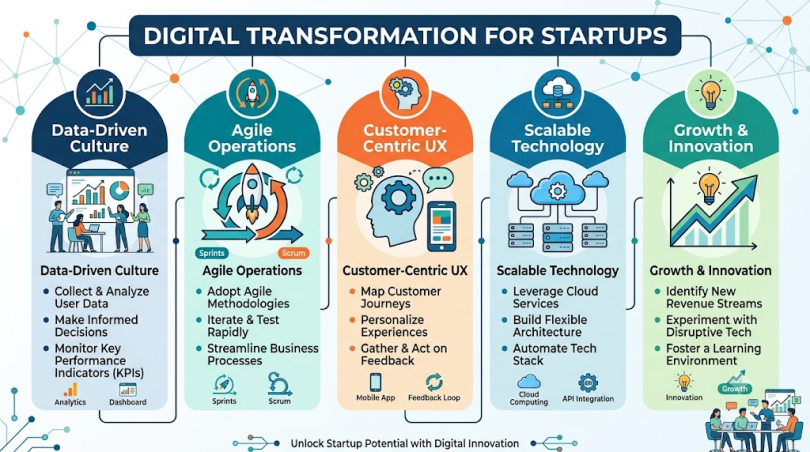

Introduction
Every startup aims to grow quickly while managing limited time, money, and resources. One of the smartest ways to achieve this goal is by embracing digital transformation for startups. Instead of relying on outdated methods, startups can use modern digital tools to improve operations, reach customers, and make better business decisions. Whether you are launching an online store, software company, or local business, adopting the right technologies creates a strong foundation for future success. This guide explains the concept, benefits, implementation steps, and common mistakes in a simple and practical way for beginners.
What is Digital Transformation for Startups?
Digital transformation for startups is the process of using digital technologies to improve business operations, customer experiences, and overall performance. It is not just about buying new software. It involves changing how a business works by integrating technology into daily activities.
For example, a startup may replace paper records with cloud storage, automate customer support using chat systems, or analyze customer behavior through digital analytics. These improvements help teams work faster while delivering better services.
Why is Digital Transformation Important?
Technology allows startups to compete with larger companies without needing massive budgets. Digital solutions increase productivity, reduce manual work, and improve communication across teams.
Customers also expect fast responses, online services, and personalized experiences. Businesses that fail to modernize may struggle to meet these expectations. By investing in digital transformation for startups, founders can adapt to changing markets and stay competitive in the long run.
Step-by-Step Guide
1. Define Business Goals
Identify the problems your startup wants to solve. Clear goals help you choose the right digital tools instead of investing in unnecessary technology.
2. Evaluate Current Processes
Review your daily operations. Look for repetitive tasks, communication gaps, or slow workflows that technology can improve.
3. Select the Right Tools
Choose software that matches your business size and budget. Examples include cloud storage, project management platforms, accounting software, and customer relationship management systems.
4. Train Your Team
Introduce employees to new systems through proper training. Even the best technology cannot deliver results if team members do not understand how to use it effectively.
5. Monitor and Improve
Measure performance using key metrics such as sales growth, customer satisfaction, and operational efficiency. Update your strategy whenever necessary to keep improving.
Benefits
Implementing digital transformation for startups offers several advantages:
- Improves operational efficiency.
- Reduces manual errors.
- Saves time through automation.
- Enhances customer experience.
- Supports data-driven decision-making.
- Increases business scalability.
- Strengthens collaboration among remote teams.
- Helps startups adapt to market changes quickly.
Risks or Disadvantages
Although digital transformation brings many benefits, startups should understand potential challenges:
- Initial technology costs may be high.
- Employees may resist changes.
- Cybersecurity risks require proper protection.
- Choosing unsuitable software can waste resources.
- Poor planning may delay expected results.
Careful preparation minimizes these risks and increases the chances of successful implementation.
Common Mistakes to Avoid
Many startups rush into technology adoption without proper planning. Avoid purchasing expensive software simply because competitors use it. Instead, focus on solutions that address your actual business needs.
Ignoring employee training is another common mistake. Team members should understand new tools before they become part of daily operations. Businesses should also avoid neglecting cybersecurity, as protecting customer information builds trust and prevents costly security issues.
Finally, remember that digital transformation is an ongoing journey rather than a one-time project. Regular reviews help businesses remain efficient as technology evolves.
FAQs
1. What is digital transformation for startups?
It is the process of using digital technology to improve business operations, customer experiences, and growth.
2. Is digital transformation expensive?
Not always. Many affordable cloud-based tools are designed specifically for startups with limited budgets.
3. Which businesses benefit the most?
Almost every startup, including retail, healthcare, education, finance, and technology companies, can benefit.
4. How long does digital transformation take?
The timeline depends on business size, goals, and implementation strategy. Many improvements can begin within a few months.
5. Why is employee training important?
Proper training ensures staff can confidently use new systems and maximize their value.
Expert Tips
Start with small improvements instead of changing everything at once. Focus on one business process, measure the results, and expand gradually. Invest in reliable cloud solutions that grow with your company. Keep customer feedback at the center of every digital decision because satisfied customers drive long-term success. Review your technology regularly to ensure it continues meeting your changing business needs. Most importantly, treat digital transformation for startups as a continuous strategy rather than a short-term project for lasting growth.
Conclusion
Digital transformation has become an essential part of building a successful startup in today’s competitive market. By adopting the right technologies, improving workflows, and focusing on customer needs, entrepreneurs can create stronger, more efficient businesses. While challenges such as costs and employee training exist, careful planning helps overcome them. Digital transformation for startups is not about following trends but about creating smarter ways to work, serve customers, and grow sustainably. Start small, stay consistent, and continue improving as your business evolves to achieve lasting success.