
Introduction
Business automation is changing the way companies work every day. From small startups to large enterprises, more organizations are using to save time, reduce costs, and improve accuracy. In simple words, means using technology to complete tasks and processes with less manual effort. Instead of doing everything by hand, businesses use software and tools to handle repetitive work.
Today, competition is high in almost every industry. Therefore, companies need faster systems and smarter workflows. This is where business automation becomes powerful. It helps teams focus on important tasks while machines handle routine activities. For beginners and intermediate readers, understanding is not difficult. In fact, once you learn the basics, you will see how practical and useful it can be.
Moreover, digital transformation has made automation tools more affordable and easier to use. Even small businesses can now apply business automation in marketing, sales, accounting, and customer support. As a result, productivity increases and errors decrease.
In this complete guide, you will learn what business automation is, why it matters, how to implement it step by step, and what benefits and risks you should know. By the end, you will clearly understand how can support growth and long-term success.
What is Business Automation?
Business automation refers to the use of software, applications, and technology to automate business processes. These processes can include sending emails, managing customer data, generating invoices, tracking inventory, or approving requests.
Instead of employees performing repetitive tasks manually, automated systems follow pre-set rules and workflows. For example, when a customer fills out a form on a website, an automated system can instantly send a welcome email, update the customer database, and notify the sales team. This is a simple example of business automation in action.
There are different types of automation used in organizations. Workflow automation focuses on streamlining internal processes. Marketing automation handles campaigns and lead nurturing. Robotic process automation manages rule-based tasks in software systems. All of these fall under the larger concept of business automation.
In addition, automation does not mean replacing humans completely. Rather, it supports employees by reducing manual workload. When routine tasks are automated, teams can concentrate on strategy, creativity, and decision-making. That is why business automation is becoming an essential part of modern business operations.
Why is Business Automation Important?

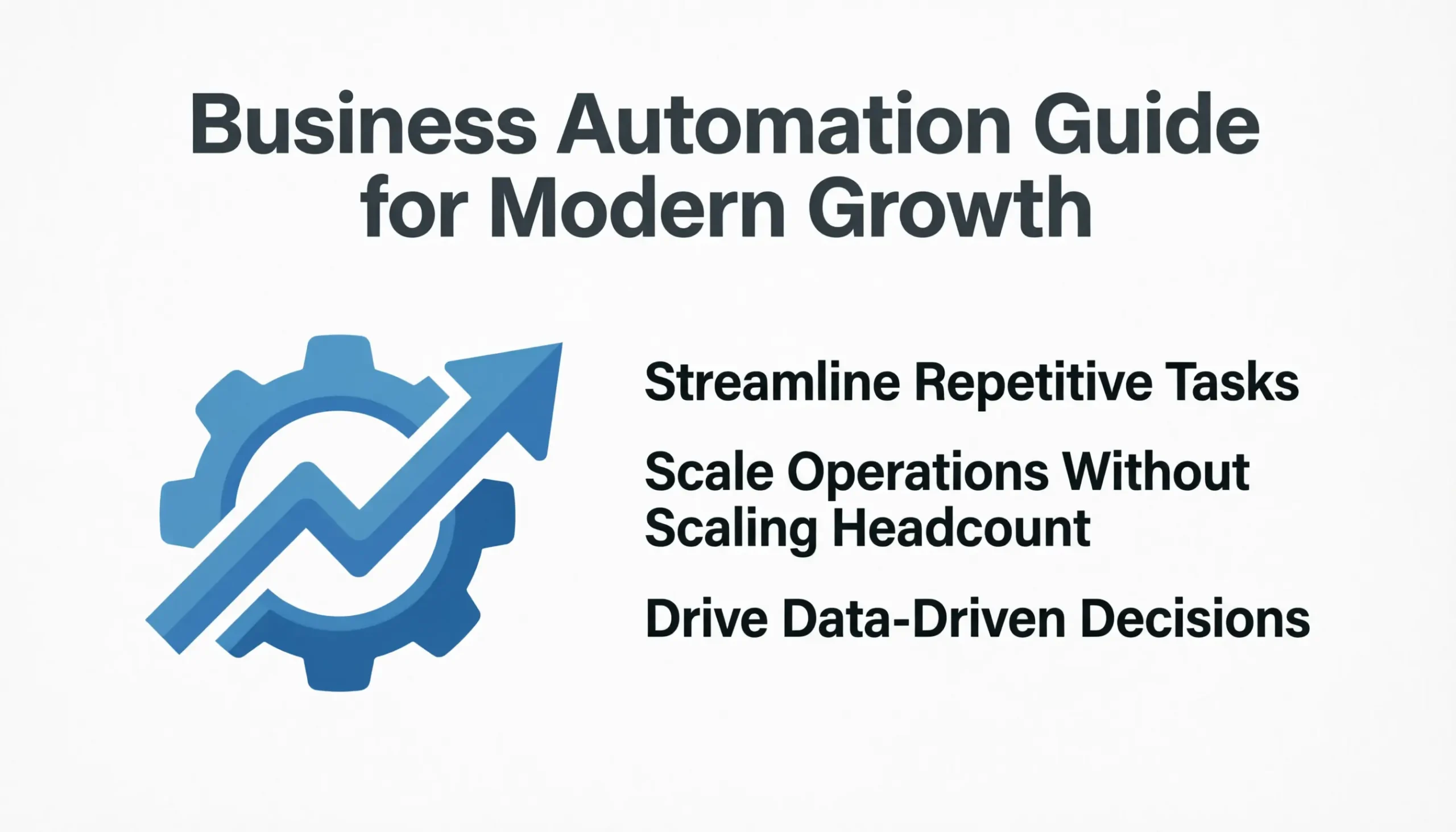
Business automation is important because it improves efficiency and reduces operational costs. When tasks are automated, they are completed faster and with fewer mistakes. This leads to better productivity and consistent results.
First, automation saves time. Employees no longer need to repeat the same tasks daily. For example, automated billing systems can generate invoices instantly without manual calculations. Second, it reduces human errors. Manual data entry often leads to mistakes, but automated systems follow programmed rules accurately.
Furthermore, business automation improves customer experience. Quick responses, accurate information, and smooth processes make customers feel valued. For instance, automated chat systems can answer common questions 24 hours a day.
Another reason why business automation is important is scalability. As a company grows, managing operations manually becomes difficult. Automation allows businesses to handle more customers and transactions without hiring too many additional staff members.
Finally, automation supports better decision-making. Many systems collect and analyze data automatically. Business owners can use this data to understand trends, track performance, and plan future strategies.
Detailed Step-by-Step Guide
Step 1: Identify Repetitive Tasks
The first step in business automation is identifying tasks that are repetitive and time-consuming. These tasks are usually rule-based and follow a clear pattern.
Examples include sending confirmation emails, updating spreadsheets, processing payroll, or managing inventory records. Write down daily and weekly activities in your business. Then highlight tasks that do not require creative thinking.
By focusing on these tasks first, you can achieve quick results from business automation.
Step 2: Set Clear Goals
Before implementing automation, define your goals clearly. Ask yourself what you want to achieve. Do you want to save time, reduce costs, improve accuracy, or enhance customer service?
Clear goals help you choose the right tools and measure success later. For example, if your goal is faster lead response, marketing automation software may be suitable.
Without clear objectives, business automation may not deliver the expected results.
Step 3: Choose the Right Tools
There are many automation tools available in the market. Some focus on marketing, others on accounting, project management, or customer relationship management.
When selecting tools, consider your budget, business size, and technical skills. Look for software that integrates well with your existing systems.
It is also wise to start with one or two processes instead of automating everything at once. Gradual implementation makes business automation easier to manage.
Step 4: Design Workflows
After selecting tools, design workflows carefully. A workflow is a step-by-step process that the system will follow automatically.
For example, in sales automation, the workflow may include capturing leads, assigning them to sales representatives, sending follow-up emails, and updating the database.
Test your workflows before launching them fully. This ensures that business automation runs smoothly without errors.
Step 5: Train Your Team
Even though automation reduces manual work, employees still need to understand how systems operate.
Provide basic training so your team knows how to use dashboards, monitor performance, and fix small issues. When employees feel comfortable with new systems, they are more likely to support business automation.
Step 6: Monitor and Improve
Automation is not a one-time setup. Regular monitoring is necessary to ensure everything works correctly.
Track key performance indicators such as response time, cost savings, and error rates. If something is not working as planned, adjust the workflow.
Continuous improvement helps maximize the benefits of business automation.
Benefits of Business Automation
- Saves time by handling repetitive tasks automatically
- Reduces operational costs over time
- Minimizes human errors in data and processes
- Improves productivity and team efficiency
- Enhances customer experience with faster responses
- Provides better data tracking and reporting
- Supports business growth and scalability
- Increases consistency in operations
These benefits show why many organizations invest in business automation to stay competitive in today’s market.
Disadvantages / Risks
- Initial setup costs can be high
- Employees may resist change
- Poor planning can lead to system errors
- Over-automation may reduce personal customer interaction
- Technical issues can disrupt operations
Although business automation offers many advantages, businesses must plan carefully to avoid these risks.
Common Mistakes to Avoid
One common mistake is automating broken processes. If a workflow is inefficient, automating it will only make the problem faster. Always improve the process before applying automation.
Another mistake is trying to automate everything at once. This can create confusion and technical problems. Instead, implement business automation step by step.
Ignoring employee training is also risky. When staff members do not understand new systems, they may misuse them or avoid them completely.
Some companies choose tools based only on price. However, cheap software may not meet business needs. Always evaluate features and long-term value.
Finally, failing to monitor results can limit success. Business automation requires regular review and improvement.
FAQs
1. Is business automation suitable for small businesses?
Yes, small businesses can benefit greatly from business automation. Many tools are affordable and designed specifically for startups and small teams.
2. Does automation replace employees?
No, business automation supports employees by handling repetitive tasks. It allows staff to focus on strategic and creative work.
3. How long does it take to implement automation?
The timeline depends on the complexity of processes. Simple workflows can be automated within days, while larger systems may take weeks or months.
4. What areas can be automated?
Common areas include marketing, sales, accounting, inventory management, human resources, and customer service.
5. Is automation expensive?
Costs vary based on tools and business size. However, long-term savings often outweigh initial investment.
6. How do I measure success?
You can measure success by tracking time savings, cost reduction, error rates, and customer satisfaction levels.
Expert Tips & Bonus Points
Start small and scale gradually. This approach reduces risk and builds confidence in new systems.
Always document your workflows clearly. Proper documentation makes troubleshooting easier.
Involve your team in planning. Their feedback can improve business automation strategies.
Regularly update your software to maintain security and performance.
Focus on customer experience. Automation should make processes smoother, not complicated.
Analyze data generated by automated systems. Insights from data can guide better decisions.
Keep learning about new tools and trends. Technology evolves quickly, and staying updated ensures long-term success.
Conclusion
Business automation is no longer a luxury for large corporations. Today, businesses of all sizes can use automation to improve efficiency, reduce errors, and support growth. By understanding the basics of, you can identify areas in your organization that need improvement and implement practical solutions.
Throughout this guide, we explored what business automation means, why it is important, and how to apply it step by step. We also discussed benefits, risks, common mistakes, and expert tips. The key message is simple: start small, plan carefully, and improve continuously.
When used wisely, business automation empowers teams rather than replacing them. It allows employees to focus on innovation, strategy, and customer relationships. Over time, this leads to stronger performance and higher profitability.
As markets continue to evolve, companies that adopt smart automation strategies will stay ahead of the competition. Therefore, now is the right time to evaluate your processes and consider how business automation can transform your operations for a more efficient and successful future.